Imane Khelif: Pro Boxing debut, controversy and new opponent
Imane Khelif makes her professional boxing debut against Elsa Hemat on December 15, amid controversy, genetic testing and uncertainty over her Olympic future.
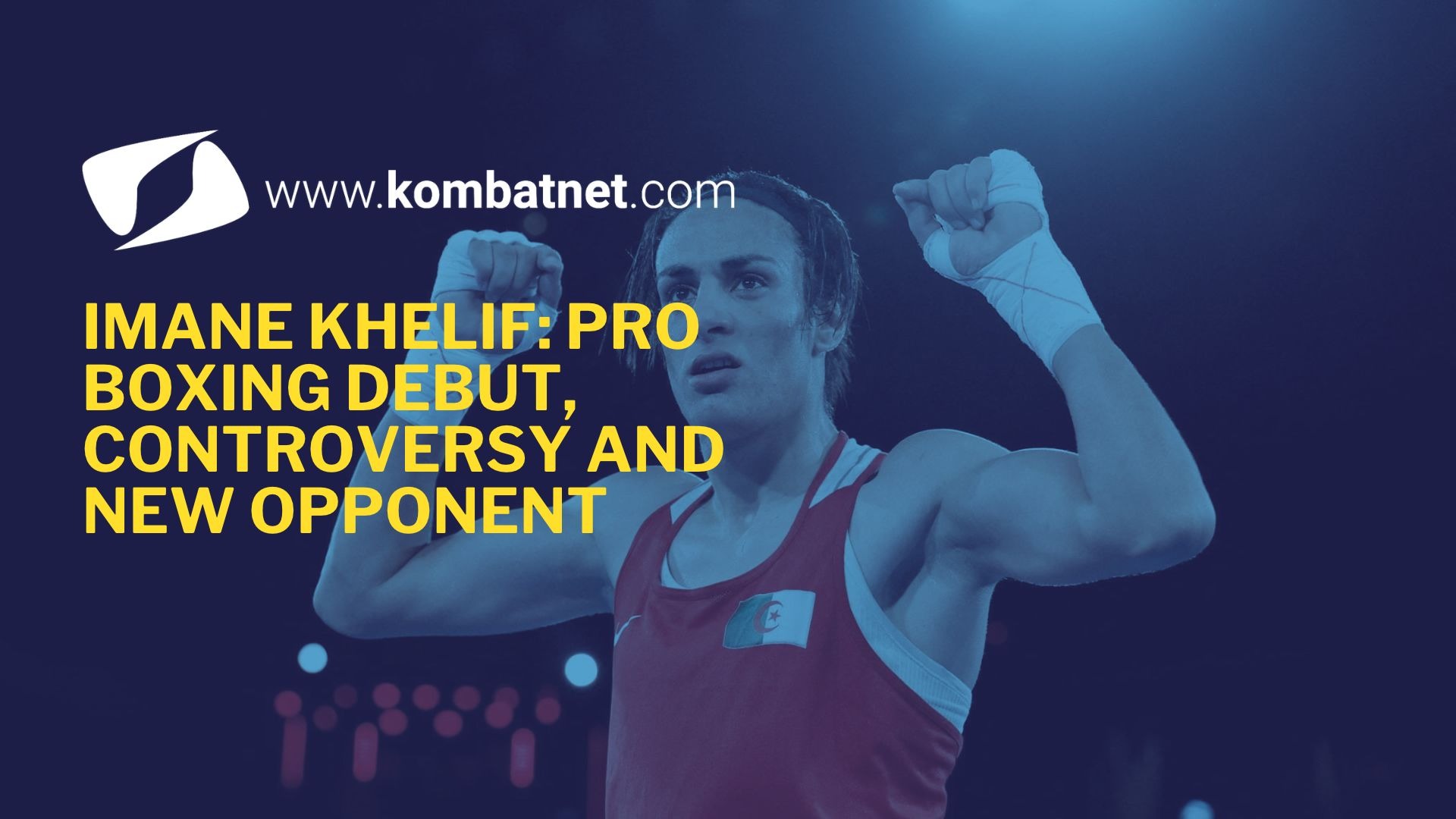
Imane Khelif, a professional debut amid controversy and a change of opponent: what's going on?
More than two years after winning the gold medal at the Paris 2024 Olympics, Imane Khelif is finally set to make her debut in professional boxing. She will do so on 15 December 2026 at the Maison de la Mutualité in Paris, but not against her originally announced opponent: the undefeated Clarida Sarabia has withdrawn from the bout following a series of disputes with the Algerian's entourage, according to her manager. Taking her place in the ring will be France's Elsa Hemat, 44 years old, seventeen years the Olympic champion's senior. The news was confirmed on 26 November by the organisers at Stair Event, speaking to Reuters. The bout is scheduled for six two-minute rounds.
This is not the first time Khelif's professional debut has run into difficulties. The Algerian was due to make her debut on 23 April at the Salle Wagram in Paris against Germany's Julia Igel, in a bout scheduled for six two-minute rounds. A shoulder injury sustained during her preparations, however, forced the organisers to postpone the event.
On 2 April, Khelif had also taken part in a six-round exhibition bout with no official verdict against France's Davina Michel, in an effort to regain her feel for the ring after a long period of competitive inactivity. Almost eight months have passed since then and, with less than three weeks to go until the new date, the Algerian finds herself having to change opponents, this time for reasons that have little to do with injuries.
Clarida Sarabia's withdrawal and her manager's allegations
The 21-year-old Clarida Sarabia, born in Spijkenisse in the Netherlands to a father from Curaçao and a Dominican mother, fights under the Dutch flag and would have entered the bout with a record of four wins and no defeats. For a young athlete at the beginning of her professional career, facing an Olympic champion would have been an opportunity to gain considerable international exposure.
Stair Event explained the withdrawal in broad terms, citing administrative reasons. The comments made by Porres Sarabia, the boxer's brother and manager, to the Dutch newspaper Algemeen Dagblad, and reported by the ANP news agency and public broadcaster NOS, were considerably less diplomatic.
According to the manager, his team was repeatedly treated disrespectfully and received repeated threats that Sarabia would be replaced during negotiations. Further tensions reportedly arose over a request for medical information concerning Khelif, made, according to Sarabia's account, in the interests of his fighter's safety. As reported by NOS, the boxer's management claims that the Algerian's entourage refused to share that information.
The Dutch boxer's team has nevertheless made it clear that it does not wish to disclose every detail of the negotiations and has not ruled out the possibility of the fight taking place in the future.
It would therefore be inaccurate to suggest, as some accounts of the affair have done, that Sarabia simply refused to fight Khelif. From the public statements available, the dispute also concerns relations between the parties and the conditions under which her management was prepared to accept the fight. At present, we do not have enough information to establish precisely what happened during the negotiations.
The question of medical information, however, inevitably brings attention back to the events that have surrounded the Algerian Olympic champion over the past few years.
Imane Khelif, her statements on the SRY gene and hormone treatment
Compared with the summer of 2024, when the Khelif controversy erupted internationally following her Olympic bout against Italy's Angela Carini, we now have some additional information provided by the athlete herself.
In an extensive interview with L'Équipe on 4 February 2026, Khelif confirmed that she naturally carries the SRY gene, normally located on the Y chromosome and involved in the mechanisms of sex differentiation. She also said that she had undergone hormone treatment to reduce her testosterone levels before the Paris Olympics.
The Algerian reiterated that she is not transgender, asserting her female identity and stressing that she is under the care of specialists.
These are significant statements, particularly in light of the controversy surrounding the 2023 IBA World Championships in New Delhi, where Khelif was disqualified before the final. The previous year, at the World Championships in Istanbul, she had won the silver medal in the 63 kg division.
It is worth recalling that the International Boxing Association itself, in an official statement dated 31 July 2024, clarified that the examinations behind the disqualification of the Algerian and Taiwan's Lin Yu-ting were not testosterone tests, contrary to what numerous media outlets had reported for some time.
According to the IBA, the decision was based on the results of two separate tests, conducted at the 2022 World Championships in Istanbul and the 2023 World Championships in New Delhi, respectively. The federation also stated that Khelif had initially appealed against her disqualification to the Court of Arbitration for Sport, before subsequently withdrawing her appeal.
The International Olympic Committee had challenged the IBA's handling of the matter, describing the decision in a joint statement with the Paris 2024 Boxing Unit as sudden, arbitrary and taken without proper procedure.
Khelif's statements to L'Équipe therefore shed further light on the matter, but they do not allow us to establish her full clinical picture or quantify any potential physiological advantages relevant to boxing. Such an assessment would require data that are not publicly available.
There is another aspect of the matter that is often overlooked: reducing circulating testosterone levels through medication and assessing the effects of any previous androgen-driven development are two different questions. Their relevance to sporting performance depends on individual physiological characteristics and the criteria adopted by the governing bodies.
And it is precisely on the regulatory front that the most significant changes have taken place since 2024.
From the Paris Olympics to professional boxing: different rules
On 30 May 2025, World Boxing, the international federation provisionally recognised by the International Olympic Committee, announced the introduction of mandatory genetic screening for eligibility to compete in its events. Its Sex Eligibility Policy officially came into effect on 20 August of that year.
As early as 5 August, Khelif had lodged an appeal with the Court of Arbitration for Sport in Lausanne against the decision that had prevented her from taking part in the Eindhoven Box Cup and made her eligibility for subsequent events organised by the federation conditional upon undergoing a genetic test. On 1 September, CAS rejected her request for provisional suspension of the measure, effectively preventing the Algerian from competing at the World Championships in Liverpool in September 2025. To date, no final decision on the merits of the appeal appears to have been published.
On 26 March 2026, the IOC itself intervened, adopting a new policy on the protection of the female category in Olympic sport, which will be applied at the Olympic Games for the first time at Los Angeles 2028 and provides for SRY gene screening.
Under the new rules, athletes who test positive in the screening will not be eligible to compete in the female category, with rare exceptions including complete androgen insensitivity syndrome (CAIS) and other specific differences of sex development that do not confer performance advantages arising from the effects of testosterone.
In light of the Algerian's statements to L'Équipe, the new rules are clearly of particular relevance to Khelif's Olympic future. Without a specific clinical assessment under the new criteria, however, it is not possible to determine whether the athlete might qualify for one of the exceptions.
Last February, Khelif had expressed her desire to compete at the next Olympics, stating that she was willing to undergo the necessary examinations under the auspices of the IOC, while expressing reservations about the way World Boxing had handled her case.
The Algerian's position appears to have changed, however. At the press conference on 6 November announcing her professional debut, Khelif said she could not answer the question of whether she would compete at Los Angeles 2028, referring to the complaints she had lodged against World Boxing concerning genetic testing. Her coach, Kamel Abdesselam, was more explicit, stating that the Algerian would not defend her Olympic title, as reported by Reuters.
The IOC's new policy does not retrospectively invalidate the result at Paris 2024, where Khelif competed in accordance with the rules in force at the time. It does, however, introduce different eligibility criteria for the future.
The move into the professional ranks opens another chapter. Professional boxing is not automatically governed by the same rules as Olympic competition, and eligibility requirements depend on the governing bodies responsible for each bout.
Khelif has obtained a female professional boxing licence from the Fédération Française de Boxe, as announced at the press conference on 6 November. The French federation has specific medical requirements for issuing and validating professional licences, but the details of the examinations carried out in the Algerian's case have not been made public.
It is in this context that the request made by Sarabia's manager should be understood. Protecting the confidentiality of athletes' medical data is a duty, but so is transparency about the criteria federations use to determine eligibility to compete. These two requirements can and must coexist.
Who is Elsa Hemat, Imane Khelif's new opponent?
Replacing Clarida Sarabia will be Elsa Hemat, a French athlete originally from Martinique with extensive experience in combat sports, acquired not only in boxing but also in kickboxing and full contact.
A professional since 2015, Hemat has a boxing record of 6 wins, 14 losses and 2 draws. A former French super lightweight champion, she won the WBF International welterweight title in Villejuif on 18 April, defeating Czech boxer Johana Rajmont on points over ten rounds.
In her most recent bout, on 14 November, Hemat lost on points by majority decision to fellow French boxer Emilie Sonvico, as reported in the French federation's official results.
Replacing an undefeated 21-year-old with a 44-year-old boxer whose losses considerably outnumber her wins clearly changes the nature of the fight. Hemat, however, has a level of professional experience that neither Sarabia nor, above all, Khelif can claim.
From a purely sporting perspective, the bout will provide an indication of how much of the ability the Algerian displayed during her Olympic campaign she has retained, and how she will adapt to professional boxing after more than two years without an official bout.
Khelif has already stated that her aim is to win a world title. It is an understandable ambition for an athlete who has reached the pinnacle of Olympic boxing, but the value of her professional career will inevitably depend on the quality of the opponents she faces and the results she achieves against them.
The fact remains that, more than two years after the Paris Olympics, much of the discussion surrounding Imane Khelif still concerns what happens before the Algerian steps into the ring.
In a sport where weight divisions are separated by as little as a few kilograms, and where athletes literally entrust their physical safety to the decisions of referees, doctors and federations, it would be desirable for questions of eligibility to compete to be addressed through scientifically grounded, public and consistent criteria.
It should not be up to individual boxers or their managers to resolve matters that fall within the remit of the bodies responsible for regulating boxing.
On 15 December, finally, the ring will have its say, too.