Canelo Alvarez Defeats Christian Mbilli to Reclaim WBC Title
Canelo Alvarez defeats Christian Mbilli by unanimous decision in Riyadh, reclaiming the WBC super middleweight title after 13 months away from the ring.
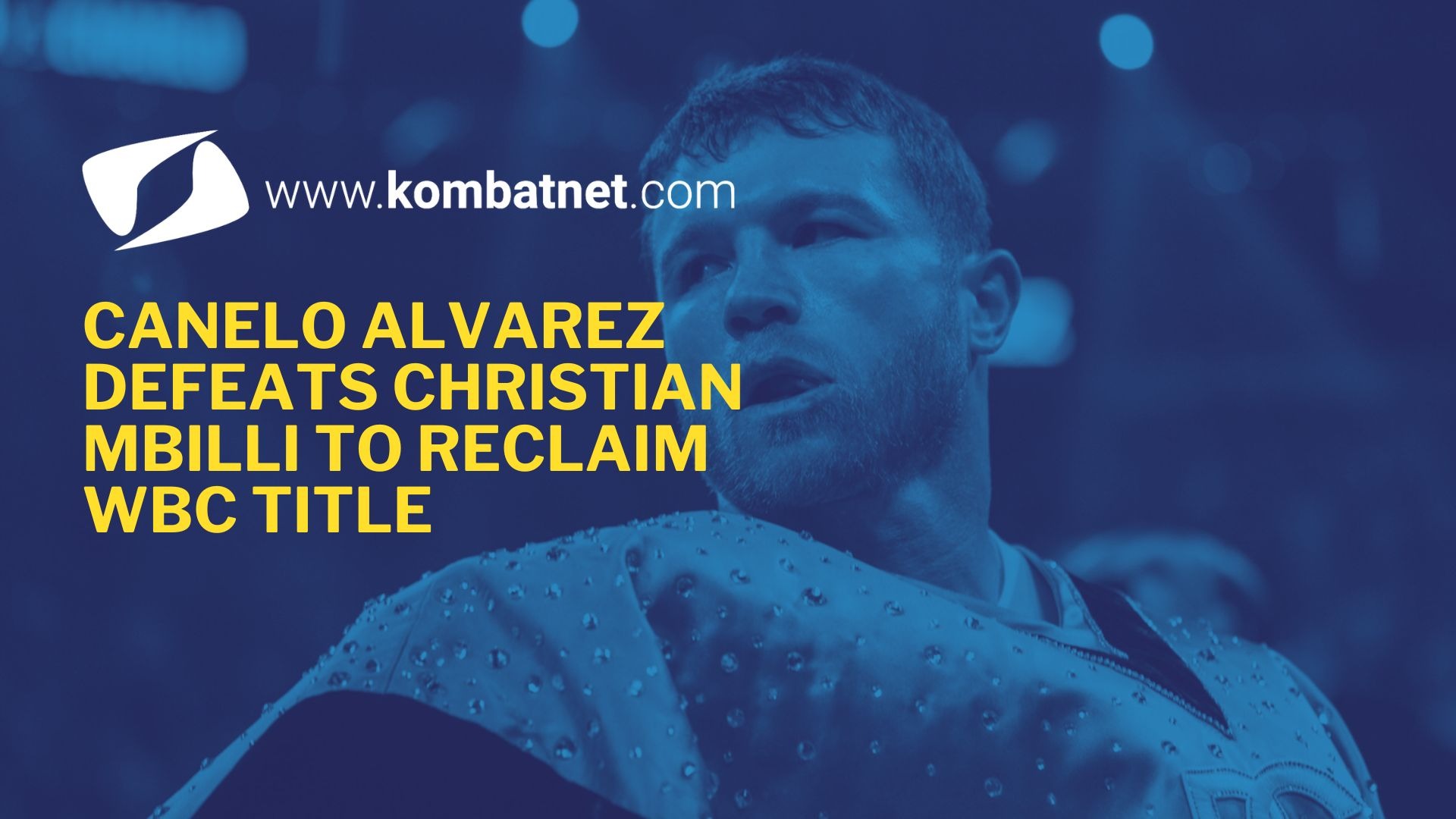
Canelo beats Mbilli and becomes WBC champion again: Crawford remains unfinished business
Saúl “Canelo” Álvarez is a world champion once again. The Mexican defeated Christian Mbilli on points after twelve rounds at the Kingdom Arena in Riyadh, Saudi Arabia, reclaiming the WBC super middleweight belt he had lost in September 2025 to Terence Crawford. The decision was unanimous: 115-112, 116-111 and 117-110. No KO, no desperate struggle for survival, but a clear victory built on patience and boxing intelligence against a younger, aggressive opponent who had remained undefeated until Saturday.
At 36, after thirteen months away from the ring and elbow surgery, Canelo improves his record to 64 wins, 3 losses and 2 draws, with 39 KOs. Mbilli, 31, suffers the first defeat of his professional career, dropping to 29-1-1, with 24 victories inside the distance.
For the Mexican, this is about more than reclaiming a belt. It is a rather convincing answer to those who, following his defeat to Crawford, had begun to wonder whether his time at the top of the Noble Art had finally come to an end.
Mbilli attacks, Canelo waits. And eventually makes him pay
On paper, Christian Mbilli appeared to have the attributes to cause the Mexican veteran plenty of trouble. Born in Cameroon, French by nationality and developed as a professional boxer in Canada, the WBC champion had built his reputation on relentless pressure, powerful combinations and a punch output considerably higher than the division's average.
He had inherited the world title in January, after being elevated from interim champion to holder of the vacant WBC belt. In June 2025, he had dispatched Maciej Sulęcki in the first round, while three months later he had fought a grueling battle with Lester Martínez, which ended in a draw.
Against Canelo, however, that same aggression gradually became a problem.
Mbilli tried to seize the initiative from the opening rounds, throwing flurries and attempting to force Álvarez against the ropes. At times, he managed to impose his own pace, but without consistently finding the clean punches needed to genuinely trouble the Mexican.
Canelo, for his part, had absolutely no intention of turning the fight into a brawl. A tight guard, minimal unnecessary movement, a jab to disrupt his opponent's entries and precise counterpunches whenever Mbilli left an opening. A stripped-down style of boxing, occasionally lacking in spectacle, but tremendously effective.
From the sixth round onward, the technical difference became increasingly apparent. The body shots began to take their toll, Mbilli's combinations became less frequent and Canelo found the right distance more consistently, allowing him to land without exposing himself. In the seventh round, an uppercut rocked the Frenchman, who nevertheless managed to stay on his feet.
The eighth round also brought a controversial incident: referee Hector Afu deducted one point from Mbilli for a punch to the back of the head. The decision, which came after protests from Álvarez, drew some criticism, but it did not determine the outcome of the fight. Even without that deduction, all three scorecards would still have favored the Mexican.
In the closing rounds, Mbilli continued searching for an opening, but could not regain the effectiveness he had shown in the early stages. Canelo managed his lead with experience, maintaining his composure until the final bell.
The result tells the story of a fairly clear victory. But it is above all the manner in which it came about that deserves attention.
The difference between throwing punches and landing them
Before the fight, the numbers painted a picture of two almost diametrically opposed boxers. In the bouts analyzed by CompuBox, Mbilli had averaged approximately 78 punches thrown per round, compared with 35 for Canelo. An enormous advantage in terms of volume, at least on paper.
In Riyadh, however, the situation was reversed in terms of effectiveness. According to CompuBox data reported by The Ring, Canelo landed 158 punches compared with his opponent's 117, despite throwing fewer overall. The Frenchman, accustomed to overwhelming his rivals with combinations, was forced to slow down, look for other solutions and, above all, deal with the precision of the counterpunches.
This is probably where the fight was decided. Not in the greater power of an individual punch, nor in physical endurance, but in Álvarez's ability to take away from Mbilli precisely what had made him dangerous up to that point.
Canelo did not fight at his opponent's pace. He forced his opponent to fight at his own.
It was not one of the most spectacular nights of his career, but expecting every high-level fight to be an all-out war means forgetting a fundamental aspect of boxing. The one in which technique serves, above all, to prevent your opponent from doing what he does best.
The comeback after Crawford and a career that refuses to end
The victory carries even greater significance when we look back at what happened in September 2025.
Against Terence Crawford, Álvarez had lost by unanimous decision in a fight that was supposed to represent another crowning achievement in his career, surrendering all four super middleweight belts to the American. For a champion accustomed to dictating the terms of his fights, it had been a heavy defeat, not merely from a sporting perspective.
Elbow surgery followed, along with a lengthy period of inactivity. In the meantime, Crawford had announced his retirement, while the world titles had once again been divided among different champions.
In Riyadh, Canelo did not regain his status as undisputed champion. He reclaimed just one of the four belts, the WBC title, but he did so against a 31-year-old boxer who had never lost as a professional. A result that does not erase the defeat to Crawford, but which, at least for the moment, puts the theory of an irreversible decline into perspective.
Immediately after the fight, the Mexican appeared particularly emotional. He explained that winning a world title again, after twenty-one years as a professional, had brought back feelings similar to those he experienced when he first became champion.
Then, inevitably, the conversation turned back to Crawford.
In an interview with Fight Hub TV, reported by The Ring, Álvarez confirmed that he still wants a rematch, hoping the American might decide to come out of retirement. For now, however, there is no agreement and no announced date for a second fight. Crawford, who retired undefeated, has shown no concrete intention of returning to the ring to face him again.
Canelo, meanwhile, said he intends to take a couple of weeks off before returning to work and evaluating his next move.
The distinction is far from insignificant: wanting a rematch is one thing; convincing a retired boxer, who has already won the first encounter, to accept it is quite another.
A champion restored, but not all the answers
The defeat does not necessarily diminish the value of Christian Mbilli, who, at 31, still has the time and ability to rebuild his position in the super middleweight division. For him, it was primarily a fight against a level of experience and tactical awareness he had rarely encountered until now.
For Canelo, on the other hand, the night in Riyadh restores something he seemed to have lost: the ability to prevail against a young, ambitious opponent without having to chase spectacle at every opportunity.
We do not know whether we will ever see Álvarez face Crawford again. Nor whether the Mexican will manage to unify the division's belts once more.
What we do know, however, is that at 36, Canelo has demonstrated that he can still win at the very highest level. And that sometimes, twelve rounds without a KO tell us far more than a spectacular finish.
The WBC belt is back in his hands. The unfinished business with Crawford, however, remains.